
Types of Beetles: A Beginner-Friendly Guide to Beetle Identification
Explore common types of beetles, learn how to identify beetles by shape, color, size, and markings, and discover useful facts about beetle species found around homes, gardens, forests, and outdoor spaces.
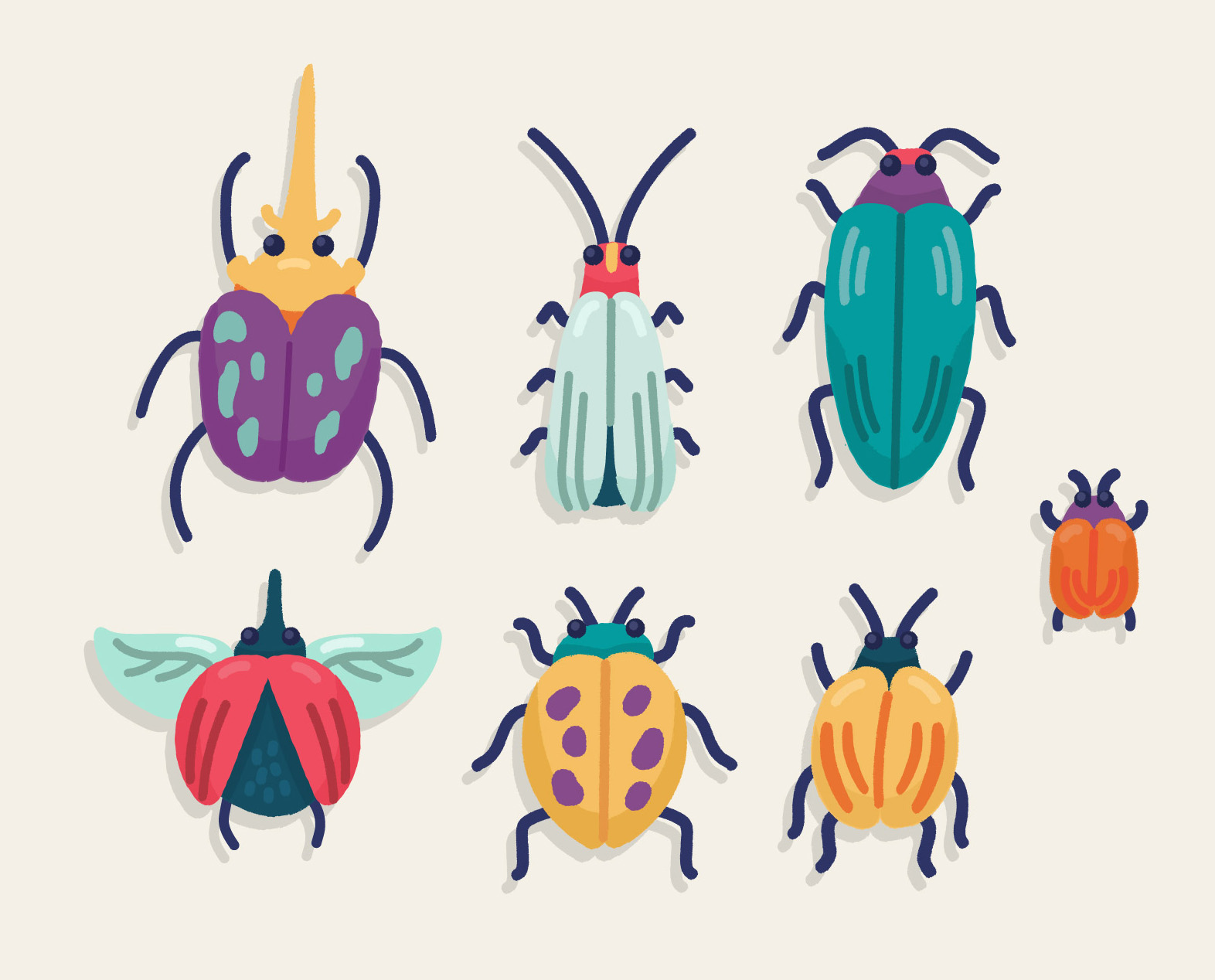
Find the right beetle guide by color, shape, place, or behavior.
Beetle identification becomes much easier when you do not rely on color alone. This homepage is organized as a practical reading path: first observe the beetle, then compare common groups, then move into species guides, home beetle questions, and simple beetle facts.
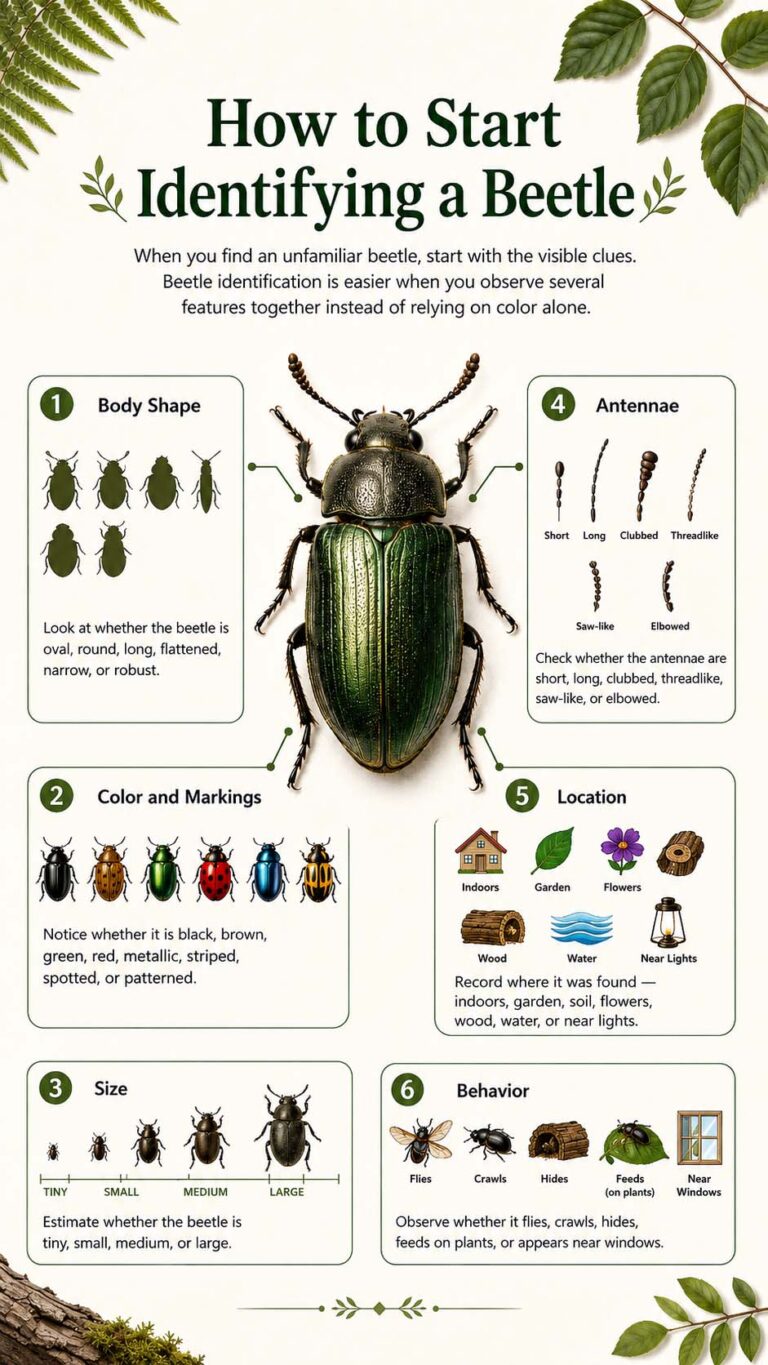
Explore beetles by identification need.
Use these main sections as the homepage navigation for readers who are trying to identify a beetle, compare beetle groups, learn about a specific species, or understand beetle behavior around the home and garden.
Beetle Identification
Learn how to identify beetles by size, color, body shape, antennae, wing covers, markings, location, and behavior.
→Types of Beetles
Compare common beetle groups such as ground beetles, scarab beetles, longhorn beetles, lady beetles, weevils, and water beetles.
→Beetle Species
Read simple species profiles with appearance, habitat, diet, life cycle, behavior, and identification clues.
→Beetles Around the Home
Identify beetles found in carpets, kitchens, windowsills, bathrooms, houseplants, stored food areas, and gardens.
→How to start identifying a beetle
A single clue is rarely enough. The most useful approach is to combine visible features with where the beetle was found and what it was doing.
- 1Check the body shape: oval, round, long, flat, narrow, or heavy-bodied.
- 2Notice the color and markings: black, brown, green, metallic, striped, spotted, or patterned.
- 3Look at the antennae: short, long, clubbed, threadlike, saw-like, fan-like, or elbowed.
- 4Record the location: indoors, garden, soil, wood, flowers, stored food, water, or near lights.
- 5Observe the behavior: crawling, flying, hiding, feeding on plants, appearing near windows, or moving at night.
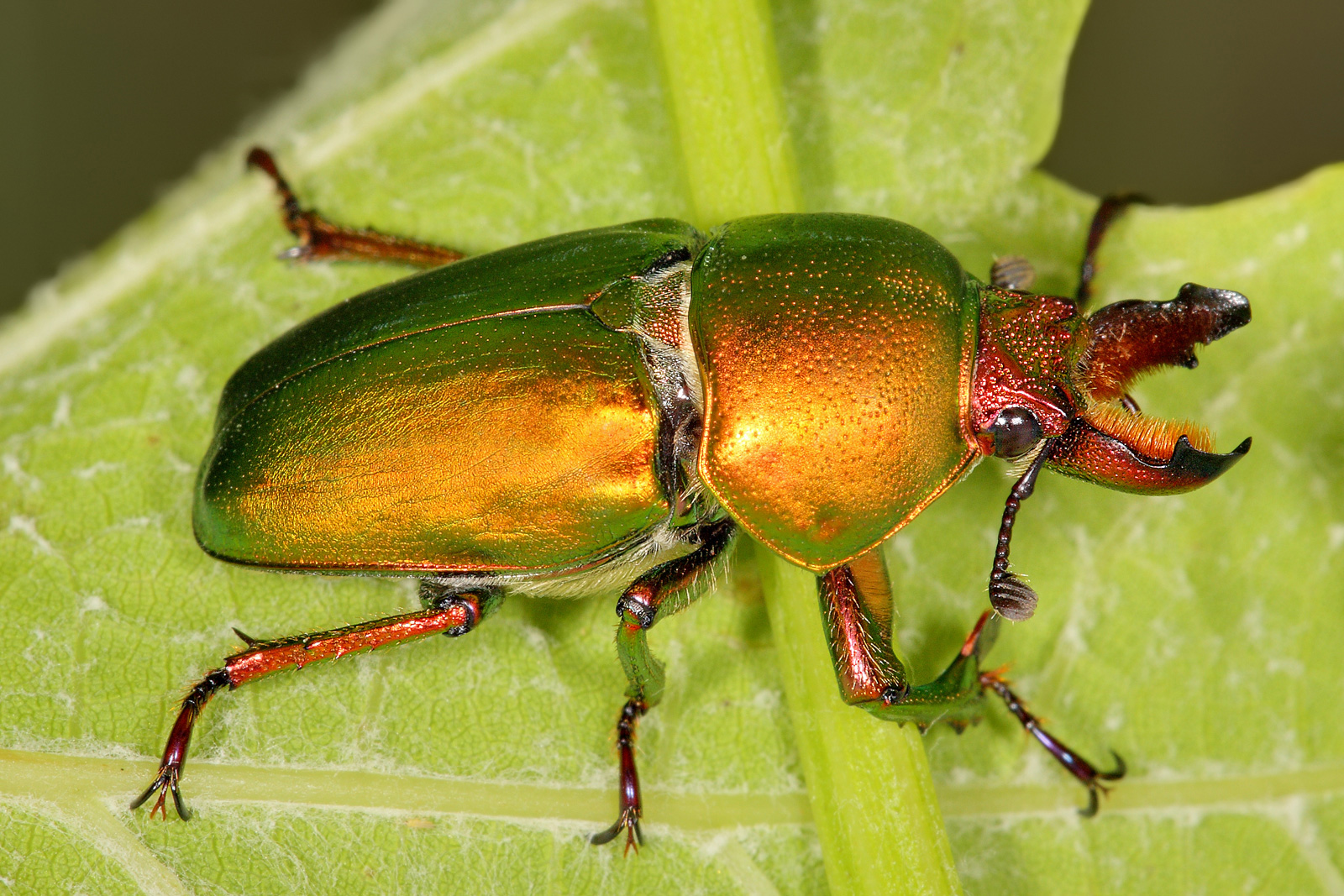
Popular beetle topics readers search for.
These topic groups help readers move from a broad question to a more specific guide. They also create clearer internal pathways between identification guides, species pages, facts, and home beetle articles.
By color and appearance
By home location
Beetle facts
Garden and outdoor beetles
Recommended beetle guides to read first.
These articles work well as homepage entry points because they answer broad, high-intent questions before guiding readers into more specific species or home identification pages.
Common Types of Beetles With Pictures
A beginner-friendly starting point for comparing beetle groups by appearance, habitat, and common identification clues.
Black Beetles in House
Useful for readers who find dark beetles around carpets, windowsills, kitchens, bathrooms, closets, or basements.
What Do Beetles Eat?
Explains beetle diets by group, including leaves, flowers, wood, stored food, fungi, dung, carrion, and other insects.
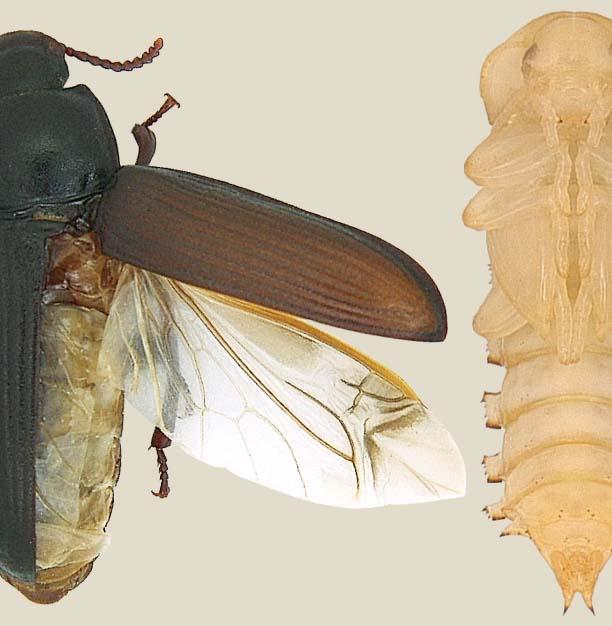
Use this site as a clear educational guide, not as a final scientific diagnosis.
Beetle identification can vary by region, season, life stage, lighting, photo quality, and local species range. Our guides are designed to help beginners notice better clues and compare likely beetle groups, but difficult identifications may still require a local expert, museum resource, university extension office, or pest professional.
Common beetle questions.
What is the easiest way to identify a beetle?
Start with body shape, size, color, antennae, wing covers, location, and behavior. A shiny black beetle indoors, a green beetle on a flower, and a longhorn beetle on wood may require different identification clues.
Are beetles harmful inside the house?
Some indoor beetles are mostly accidental visitors, while others may be linked to stored food, carpets, fabrics, houseplants, or moisture. The location where you found the beetle is usually the first clue.
Why do beetles appear near windows or lights?
Some beetles are attracted to light, especially at night. Others move toward windows because they are trying to leave the house or because light collects near that area.
Can color alone identify a beetle?
Usually no. Many unrelated beetles can be black, brown, green, metallic, spotted, or striped. Color is useful, but it should be combined with shape, antennae, size, habitat, and behavior.
Begin with the beetle clue you can see most clearly.
Choose a guide by color, body shape, location, or behavior. Then compare several clues together before deciding what kind of beetle you may have found.
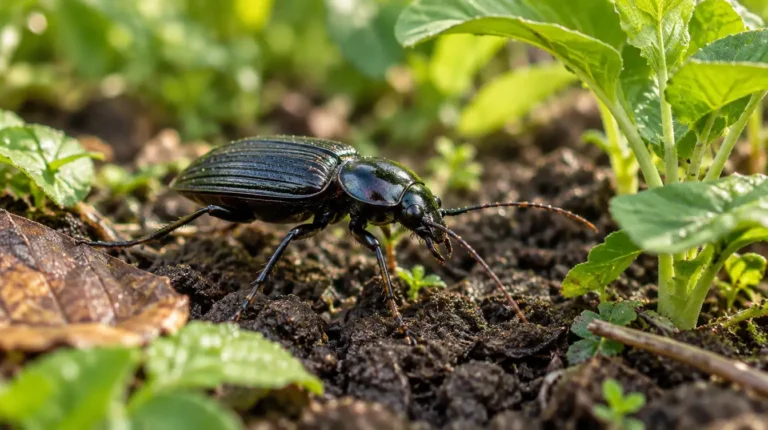
Beneficial Beetles in the Garden: Types & How to Attract Them
A black beetle racing beneath the mulch may be hunting caterpillars. An orange beetle resting on a flower could be
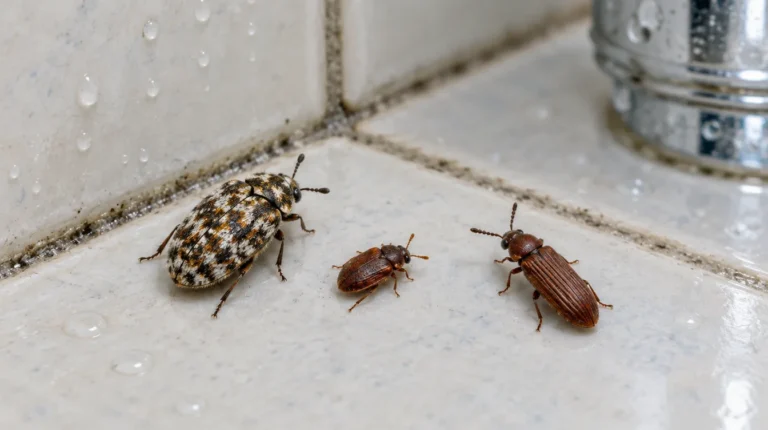
Beetles in Bathroom: Why They Appear and How to Identify Them
Most beetles found in a bathroom fall into one of three situations. Some are tiny beetles that feed on mold
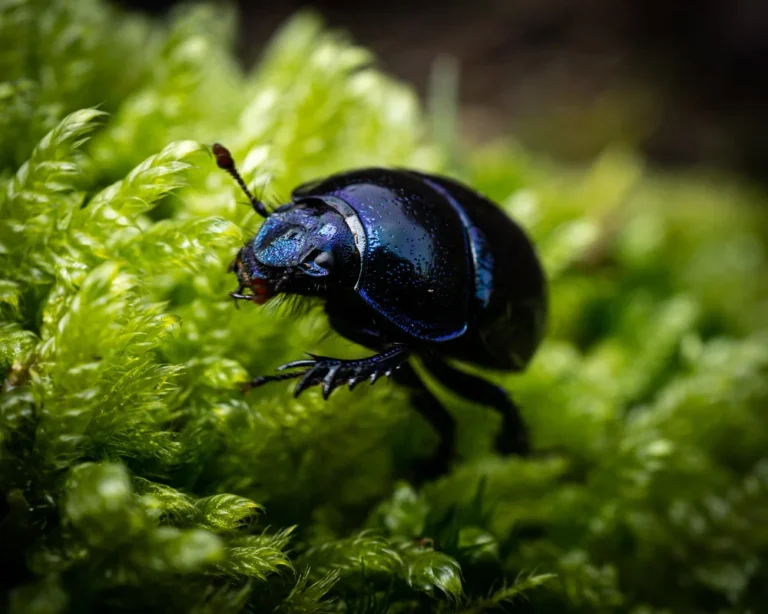
Beetles Attracted to Indoor Lights
A beetle repeatedly bumping against a ceiling light at night can make it seem as though something inside the room